



In the dynamic world of lighting technology, LED spotlights have emerged as a leading choice for their energy efficiency, long lifespan, and versatility. As a prominent LED spotlight supplier, I've witnessed firsthand the growing demand for these lighting solutions across various sectors, from residential to commercial and industrial applications. One crucial aspect that often comes under scrutiny is the flicker rate of LED spotlights. In this blog post, I'll delve into what flicker rate is, why it matters, and how it pertains to our range of LED spotlights.
Understanding Flicker Rate
Flicker rate refers to the frequency at which a light source rapidly turns on and off. This phenomenon is often imperceptible to the naked eye, but it can have significant implications for human health and visual comfort. The flicker rate is typically measured in Hertz (Hz), which represents the number of cycles per second. For example, a light source with a flicker rate of 100 Hz turns on and off 100 times per second.
Historically, traditional incandescent bulbs had a relatively high flicker rate due to the alternating current (AC) power supply. When the current changes direction, the filament in the bulb heats up and cools down, causing the light output to fluctuate. Fluorescent lights also exhibit flicker, which can be exacerbated by factors such as the ballast type and the age of the lamp.
LED spotlights, on the other hand, are designed to operate on direct current (DC) power. However, in many cases, they are connected to an AC power source, which requires a driver to convert the AC to DC. If the driver is not properly designed or of low quality, it can cause the LED to flicker. Additionally, some LED drivers use pulse-width modulation (PWM) to control the brightness of the light, which can also introduce flicker.
Why Flicker Rate Matters
The flicker rate of a light source can have several negative effects on human health and well-being. Here are some of the key reasons why it's important to consider flicker rate when choosing LED spotlights:
- Eye Strain and Fatigue: Flickering lights can cause eye strain, headaches, and fatigue, especially when exposed to them for extended periods. This is particularly problematic in work environments where employees need to focus on tasks for long hours.
- Migraines and Seizures: For some individuals, flickering lights can trigger migraines or even seizures. This is known as photosensitive epilepsy, and it affects a small percentage of the population. However, it's important to minimize the risk of triggering these conditions by using lighting with a low flicker rate.
- Visual Performance: Flicker can also affect visual performance, such as reading speed and accuracy. When the light flickers, it can cause the text on a page to appear blurry or jumpy, making it more difficult to read.
- Safety Concerns: In certain applications, such as industrial settings or outdoor lighting, flicker can pose a safety hazard. For example, flickering lights can make it difficult to see clearly, increasing the risk of accidents.
Measuring Flicker Rate
There are several methods for measuring the flicker rate of a light source. One common approach is to use a flicker meter, which is a specialized device that measures the variation in light output over time. Flicker meters can provide accurate measurements of the flicker rate and other flicker-related parameters, such as the flicker index and the percent flicker.
Another method for measuring flicker is to use a smartphone camera. Many smartphones have a high frame rate mode that can capture the flickering of a light source. By analyzing the video footage, it's possible to estimate the flicker rate. However, this method is less accurate than using a flicker meter and may not be suitable for all applications.
Our Range of Low-Flicker LED Spotlights
As a supplier of LED spotlights, we understand the importance of providing high-quality lighting solutions with a low flicker rate. That's why we've invested in research and development to ensure that our LED spotlights meet the highest standards of performance and reliability.
Our 5W MR16 LED Spotlight is a popular choice for residential and commercial applications. It features a low flicker rate and a high color rendering index (CRI), which means it provides accurate and natural-looking light. The MR16 spotlight is also energy-efficient, consuming up to 80% less energy than traditional halogen bulbs.
For more demanding applications, we offer the COB 6W Plastic Wrapped Aluminum Spotlight. This spotlight uses chip-on-board (COB) technology to provide a high-intensity, uniform light output. It has a low flicker rate and is designed to withstand harsh environments, making it suitable for industrial and outdoor applications.
Our GU10 Cylindrical LED Spotlight is another popular option for residential and commercial lighting. It has a sleek and modern design and provides a focused beam of light. The GU10 spotlight has a low flicker rate and is available in a variety of color temperatures to suit different applications.
Choosing the Right LED Spotlight
When choosing an LED spotlight, it's important to consider several factors, including the flicker rate, color temperature, CRI, and energy efficiency. Here are some tips to help you choose the right LED spotlight for your needs:
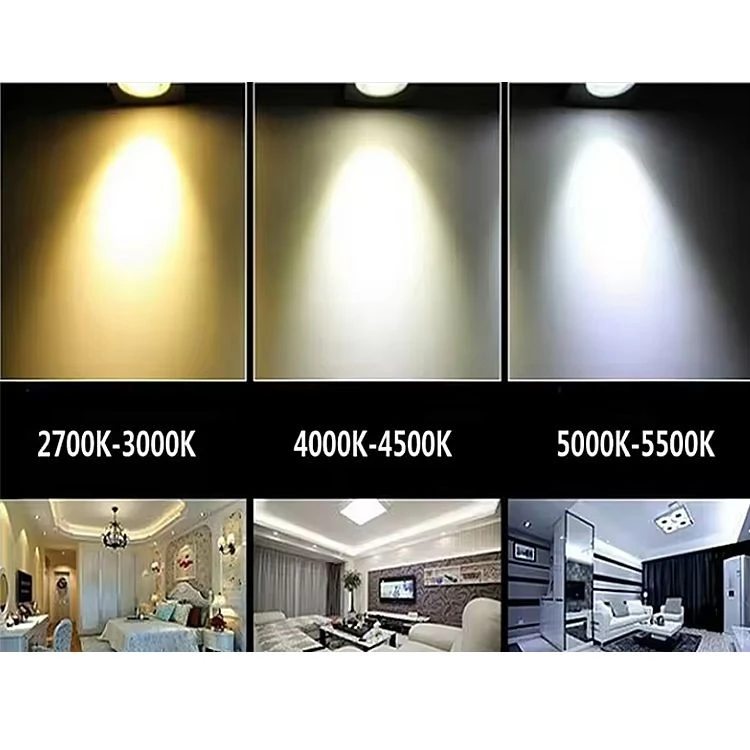

- Flicker Rate: Look for LED spotlights with a low flicker rate, preferably less than 10%. This will help to minimize eye strain and fatigue and ensure a comfortable viewing experience.
- Color Temperature: The color temperature of a light source affects the mood and ambiance of a space. Choose a color temperature that is appropriate for the application. For example, a warm white light (2700K - 3000K) is suitable for residential settings, while a cool white light (4000K - 5000K) is better for commercial and industrial applications.
- CRI: The CRI measures how accurately a light source renders colors. Look for LED spotlights with a CRI of at least 90 to ensure that colors appear natural and vibrant.
- Energy Efficiency: LED spotlights are known for their energy efficiency, but some models are more efficient than others. Look for LED spotlights with a high lumen per watt (LPW) rating to ensure that you're getting the most light for your energy consumption.
Contact Us for Your LED Spotlight Needs
If you're in the market for high-quality LED spotlights with a low flicker rate, look no further. As a leading supplier of LED lighting solutions, we offer a wide range of products to meet your needs. Whether you're looking for residential, commercial, or industrial lighting, we have the expertise and experience to help you find the right solution.
Contact us today to learn more about our LED spotlights and to discuss your specific requirements. Our team of lighting experts will be happy to assist you and provide you with a free quote. Let's work together to create a brighter, more energy-efficient future.
References
- "Lighting Flicker: What It Is and Why It Matters." Energy Star.
- "Flicker in LED Lighting: Causes, Effects, and Solutions." Lighting Research Center.
- "Measuring Flicker in LED Lighting." National Institute of Standards and Technology.