



Hey there! As a supplier of LED wall lights, I often get asked about the power consumption of these nifty lighting fixtures. Today, I'm gonna dive deep into this topic and share everything you need to know.
First off, let's understand why power consumption matters. In a world that's becoming more and more energy - conscious, knowing how much electricity your lights use is crucial. Not only does it impact your energy bills, but it also has environmental implications. Less power consumption means a reduced carbon footprint, and who doesn't want to be a part of the greener movement?
LED wall lights have a huge advantage over traditional lighting sources like incandescent and fluorescent bulbs when it comes to power usage. Incandescent bulbs convert a large portion of the energy they consume into heat rather than light. In fact, they're only about 10% efficient in producing light. Fluorescent bulbs are better, but still, LEDs take the cake. LEDs are highly efficient, converting up to 90% of the energy they consume into light. This efficiency is what makes LED wall lights such a great choice for both residential and commercial use.
Now, let's talk numbers. The power consumption of LED wall lights can vary widely depending on several factors. One of the main factors is the brightness, which is measured in lumens. Generally, the brighter the light, the more power it will consume. For example, a basic LED wall light that's used for ambient lighting in a small hallway might consume around 5 - 10 watts. But if you're looking for a more powerful light to illuminate a large commercial space, it could consume anywhere from 20 - 50 watts or even more.
Another factor that affects power consumption is the quality and design of the LED wall light. High - quality LEDs are often more energy - efficient because they use better materials and advanced technology. A well - designed LED wall light will also have better heat dissipation, which helps the LEDs work more efficiently. For instance, the GU10 Double Head Wall LED Lamp uses advanced LED chips and a smart design that ensures low power consumption while still providing sufficient brightness.
The color temperature of the LED wall light can also play a role. Warmer color temperatures (around 2700K - 3000K) usually consume a bit less power compared to cooler color temperatures (around 5000K - 6500K). This is because the phosphors used to produce warmer light are generally more efficient.
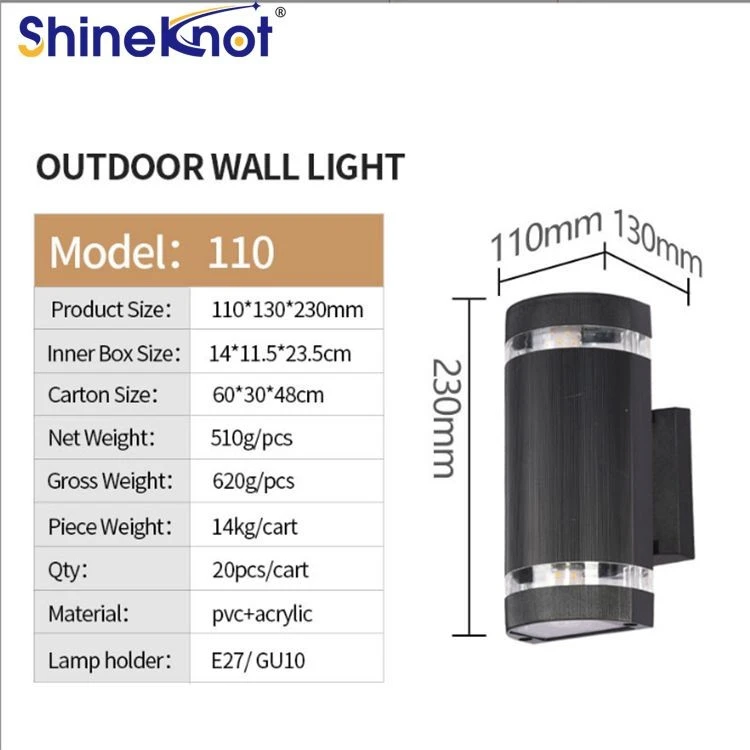
Let's take a look at some of our popular products and their power consumption. The GU10 Aluminum Double Head Wall Lamp is a great option for commercial and residential use. It typically consumes about 15 - 20 watts, depending on the settings. This lamp offers a good balance between brightness and power usage, making it suitable for a variety of applications like corridors, entryways, or even as accent lighting in a room.
For outdoor use, the IP67 LED Outdoor Bulkhead Wall Lamp is a top - notch choice. Due to its durability and the need to provide sufficient illumination outdoors, it generally consumes around 30 - 40 watts. But considering the long - term energy savings and the fact that it can withstand harsh weather conditions, it's definitely worth the investment.
To put the power consumption of LED wall lights into perspective, let's compare them with traditional lighting. Suppose you have a 60 - watt incandescent bulb that you're using for wall lighting. If you replace it with a 10 - watt LED wall light that produces the same amount of light (in lumens), you'll be saving a significant amount of energy. Over the course of a year, if you use the light for 5 hours a day, the incandescent bulb would consume about 109.5 kilowatt - hours (kWh), while the LED wall light would only consume about 18.25 kWh. That's a huge difference!
When you're choosing an LED wall light, it's important to look at the power consumption label. Most manufacturers will provide information about the wattage and sometimes even the estimated energy cost per year. This will help you make an informed decision based on your lighting needs and budget.
In addition to the initial power consumption, it's also important to consider the lifespan of the LED wall light. LEDs generally have a much longer lifespan compared to traditional bulbs. A good quality LED wall light can last up to 50,000 hours or more, while an incandescent bulb might only last around 1,000 hours. This means that you'll have to replace LED wall lights less frequently, which not only saves you money on replacement bulbs but also reduces waste.
If you're thinking about installing LED wall lights in your home or business, it's a good idea to do a little planning. Consider the areas where you need lighting and the level of brightness required. You might want to use dimmer switches to further control the power consumption. Dimmers allow you to adjust the brightness of the light according to your needs, which can save even more energy.
So, there you have it! The power consumption of LED wall lights depends on various factors like brightness, quality, color temperature, and design. But overall, they're a highly energy - efficient lighting option that can save you money in the long run and help the environment.
If you're interested in purchasing LED wall lights for your project, whether it's a small home renovation or a large commercial installation, I'd love to talk to you. We have a wide range of products to suit different needs and budgets. Just reach out, and we can start a discussion about the best LED wall lights for you.
References

- General knowledge about LED lighting technology
- Product specifications of our LED wall lights