



LED Flood Light
Tongxiang Shineknot Lighting Co,.Ltd was founded in 2010. We have specialized in led lighting field for more than 14 years.
Our factory has about 50 workers and 5 engineers. We can manufacture led tube light, floodlight, high bay, emergency light and so on by 4 production line. All the products need to be inspected and tested before shipping.
-
![Projector Light For Ceiling]() Projector Light For CeilingProjection lights can turn the bedroom into a very comfortable and quiet starry night sky, creating a wonderful and peaceful environment that can create a very romantic atmosphere for you.read more
Projector Light For CeilingProjection lights can turn the bedroom into a very comfortable and quiet starry night sky, creating a wonderful and peaceful environment that can create a very romantic atmosphere for you.read more -
![Outdoor LED Solar Floodlight]() Outdoor LED Solar FloodlightOutdoor solar floodlights are lighting devices that utilize solar energy as their energy source. They combine advanced technologies such as solar energy, LED technology, and photovoltaic...read more
Outdoor LED Solar FloodlightOutdoor solar floodlights are lighting devices that utilize solar energy as their energy source. They combine advanced technologies such as solar energy, LED technology, and photovoltaic...read more -
![30W Super Slim Floodlight]() 30W Super Slim FloodlightSmall Apple Mini Projection Lightread more
30W Super Slim FloodlightSmall Apple Mini Projection Lightread more
Die-cast Aluminum Shell Material+Tempered Glass Face Mask Sodium Reflector
2835 SMT Beads Number of Beads: 36 -
![100w Led Floodlight for Philips]() 100w Led Floodlight for PhilipsDie-casting Technology, excellent thermal management and decrease the lumen depreciationread more
100w Led Floodlight for PhilipsDie-casting Technology, excellent thermal management and decrease the lumen depreciationread more -
![150W LED Floodlight]() 150W LED FloodlightMaterial: die-cast aluminum housingread more
150W LED FloodlightMaterial: die-cast aluminum housingread more
Nanometer nanometer soft light reflection light
Color temperature: 2700~6000K -
![6500K 20W LED COB Floodlight]() 6500K 20W LED COB FloodlightWarranty: 1 year warrantyread more
6500K 20W LED COB FloodlightWarranty: 1 year warrantyread more
Luminous effect: 60lm/w
Nominal power: 60% -
![IP66 50W Warmwhite LED Floodlight]() IP66 50W Warmwhite LED Floodlight3mm Tempered Glass Cover.Adopt high-density toughened mask,high impact resistance,good thermal stability,explosion-proof compressive resistance and high-temperature resistance,safety and...read more
IP66 50W Warmwhite LED Floodlight3mm Tempered Glass Cover.Adopt high-density toughened mask,high impact resistance,good thermal stability,explosion-proof compressive resistance and high-temperature resistance,safety and...read more


Why Choose Us
Professional Team
Tell us what you need, and we'll analyse your market and provide a comprehensive business solution.
We will collaborate if you have a project tender, to help you win the contract.
High Quality
We will provide services from product design, production, and delivery. Your order will be guaranteed after sale.
Our Certificate
CE, Rohs.
Production Market
Our main export market: The south east Asia, middle east, south pacific and Africa.
LED flood lights are high-intensity artificial lights that utilize a semiconductor chip to convert electrical energy into light. They emit directional light that can be focused on specific areas, making them perfect for illuminating large outdoor spaces. The term “flood” refers to a type of lighting that provides a wide distribution of light, unlike spotlights that emit narrow and focused beams.
Flood lights are versatile lighting fixtures that can be installed on poles, walls, or other structures. They can be connected to a power source or powered by solar panels or batteries for off-grid use. With the introduction of energy-efficient LED technology, flood lights can consume less energy and provide longer-lasting performance than traditional halogen or incandescent bulbs.
Benefits of LED Flood Light
Long lifespan:
LED flood lights can last up to 150,000 hours, which is much longer than other light sources. This means they can save you money and time on buying and replacing bulbs, as well as reduce your environmental impact and waste.
Energy efficiency:
LED flood lights can produce more light output (lumens) per unit of power input (watts) than other light sources. This means they can save you energy and money on your electricity bills, as well as reduce your greenhouse gas emissions.
Quality of light:
LED flood lights can provide bright and clear light that can show the true colors of the objects they illuminate. They also have a high color rendering index (CRI) of above 90 Ra, which means they can show the colors of the objects almost as they are in reality. They also have a low lumen depreciation, which means they can maintain their brightness and quality over time.
Style and design:
LED flood lights have a simple and elegant look that can enhance the appearance and functionality of your space. They also come in different shapes, sizes, and styles to suit different needs and preferences. They also have features such as dimmers, sensors, timers, or remote controls that can give you more flexibility and convenience.
Safety and durability:
LED flood lights are more resistant to weather, shock, vibration, and corrosion than other light sources. They also generate less heat and do not contain any harmful substances, such as mercury or lead, that could pollute the soil or water. They also do not cause any electrical problems or fire hazards.
Benefits of LED Flood Light
Long lifespan:
LED flood lights can last up to 150,000 hours, which is much longer than other light sources. This means they can save you money and time on buying and replacing bulbs, as well as reduce your environmental impact and waste.
Energy efficiency:
LED flood lights can produce more light output (lumens) per unit of power input (watts) than other light sources. This means they can save you energy and money on your electricity bills, as well as reduce your greenhouse gas emissions.
Quality of light:
LED flood lights can provide bright and clear light that can show the true colors of the objects they illuminate. They also have a high color rendering index (CRI) of above 90 Ra, which means they can show the colors of the objects almost as they are in reality. They also have a low lumen depreciation, which means they can maintain their brightness and quality over time.
Style and design:
LED flood lights have a simple and elegant look that can enhance the appearance and functionality of your space. They also come in different shapes, sizes, and styles to suit different needs and preferences. They also have features such as dimmers, sensors, timers, or remote controls that can give you more flexibility and convenience.
Safety and durability:
LED flood lights are more resistant to weather, shock, vibration, and corrosion than other light sources. They also generate less heat and do not contain any harmful substances, such as mercury or lead, that could pollute the soil or water. They also do not cause any electrical problems or fire hazards.

The Difference Between LED Flood Light and Floodlight
When many people first saw LED floodlights and floodlights, they thought they were the same light. In fact, this is not the case. LED flood lights and floodlights are not the same kind of lights.
1. Illumination effect of LED flood light and flood light
LED flood light, also known as spotlight. In general, it is capable of aiming in either direction and has a structure that is not affected by climatic conditions. The beam angle of the LED flood light is wide or narrow, and the variation range is between 0° and 180°. According to LED flood light manufacturers, LED flood light is mainly used in wall lighting, outdoor lighting projects, park square lighting and outdoor advertising lighting and other places.
LED floodlight is a point light source that can illuminate evenly in all directions. Its illumination range can be adjusted arbitrarily. It is the most widely used in rendering production. Standard floodlights are used to illuminate the entire scene.
Because the illumination range of LED floodlights is relatively large, the illumination effect of floodlights is very easy to predict, and this light has many auxiliary uses. The difference between LED floodlights and floodlights lies in the visual effect of lighting. LED floodlights cannot establish too many light sources, otherwise the visual effect will appear dull and dull.
2. Illumination range of LED flood lights and floodlights
The difference between LED floodlights and floodlights is the range of illumination. LED floodlights are also known as spotlights, spotlights, spotlights, etc. They are mainly used for architectural decorative lighting and commercial space lighting, and there are many types to choose from. There are also more styles, which are easy to match with the scene well.

Wall mount led flood light
The wall-mounted LED floodlight is a luminaire or lighting fixture attached to a wall. Motion sensor lights are commonly used in homes worldwide as two-headed fixtures. Business floodlights, including high-output commercial floodlights, can be used as part of this system.
Halogen floodlights
Until LEDs appeared and realized their tremendous plan to take over the world, halogen bulbs were the bestselling type of light bulb for outdoor floodlights. Halogen bulbs offer few advantages over incandescent bulbs and an upgraded version of incandescent ones. Halogen bulbs are pretty much like regular incandescent bulbs.
Fluorescent floodlights
People are likely to encounter fluorescent lighting at the office, school, or grocery store. Compared to incandescent light bulbs and halogen bulbs, they are known for their high energy efficiency.
Incandescent floodlights
Incandescent light bulbs and floodlights are sources of electric light that work through incandescence, which occurs when the filament is heated. These products are available in an extensive range of sizes, powers, and voltages. Incandescent bulbs contain a tungsten filament inside a glass enclosure. An electric current flows during the filament’s heating process to produce light.
While choosing the right floodlight depends on your lighting needs, there are a few things you should keep in mind before purchasing an LED floodlight.
Location
Do you want to install the LED floodlight indoors? Or outdoors? Or in your garage or basement? The choice of LED floodlights will vary in different use cases.
Beam Angle
Deciding will help you choose the right beam angle for your needs with LED floodlights.
Luminous Efficiency
This determines how much energy the LED floodlight will save. So when you buy an LED floodlight, you need to look for "lumens per watt" because this is the unit of luminous efficiency. The higher the ratio, the more efficient the LED floodlight will be.
Heat Dissipation
This means whether the heat generated by the LED floodlight is well handled. Therefore, it protects the LED floodlight from damage due to overheating. A good heat sink has a high thermal conductivity.
Waterproof & Dustproof
Waterproofing of LED floodlights is a must. It is an asset for specific environments, such as outdoor patios and playgrounds.
Color Rendering Index
This index determines whether the color of the LED floodlight will show up well under a specific light. For example, playground lighting requires a CRI of 80. For settings that retain concentrated light, such as art galleries, a super high CRI of 90 to 95 is sometimes required.
Application of LED Flood Light
Warehouse Facilities
Warehouses are expansive buildings with plenty of dark corners and back spaces. Installing LED flood lights improves safety for employees and helps to discourage break-ins. Thieves rarely target well-lit spaces, preferring to sneak around in the dark.
To save on energy usage, building owners can install flood lights with motion sensors. The lights only turn on when they detect movement.
Streets and Parks
Well-lit streets cut down on neighborhood crime and prevent traffic accidents. LED floodlights can also make parks, city squares, and other public gathering spaces safer for residents. Along with reducing crime, the wide-angle beam from the floodlights illuminates any potential hazards along the paths.
Parking Lots
No one likes walking through a dark parking lot. It’s potentially dangerous, even in low-crime neighborhoods. Installing flood lights helps keep people and vehicles safe. Even if you have residual light from street lamps, it’s still a good idea to invest in energy-saving LED flood lights.
Commercial Properties
Business centers and shopping malls are large properties requiring plenty of illumination. Installing outdoor flood lights that brighten up dark parking lots and showcase the building is a smart business move. Employees and visitors feel safer on the property. An added advantage is using floodlights to highlight the building. You can improve the brand while helping to ensure everyone’s safety.
Step-by-Step LED Flood Light Installation Guide
Selecting the Right Location
Select the right location for the LED flood lights. The user should aim for positions that provide maximum coverage while avoiding problems. Check the angles required for security, considering that LED flood lights have a directional beam.
Mounting Brackets Installation
The next step would be to simply attach the mounting brackets to the chosen locations using a screwdriver. Ensure the brackets are fixed to provide a stable foundation for the LED flood lights.
Wiring Preparation
Plan the wiring route, keeping it safe and secure. Usually, the lights come with an attached power cord. Route it to the power source. Using a drill, the user can create holes for the wiring for hardwired installations, ensuring a clean and organised setup.

The floodlight consists of three components: optical, mechanical and electrical.
The optical components are mainly the reflector, the masking grating and the light source.
The mechanical components are mainly the housing, the focusing mechanism for fixing and adjusting the position of the light source, the bracket for fixing the luminaire, the base, and the angular direction part for adjusting the direction of projection of the luminaire beam.
For most enclosed floodlights, the mechanical parts also have protective glass and various sealing rings. Depending on the requirements of the application, some floodlights also have a metal mesh cover. Well-equipped floodlights are also equipped with air filters.
LED flood lights are powerful and versatile lighting solutions that can be used for various indoor and outdoor applications, such as security, landscape, sports, industrial, and commercial lighting. LED flood lights offer many benefits over traditional halogen or HID lights, such as energy efficiency, long lifespan, environmental friendliness, and quality of light. However, to enjoy these benefits, you need to take good care of your Led Flood Light lenses and prevent common problems that can affect their performance and durability. In this article, we will provide some tips on how to maintain the LED Flood Light lenses and prevent common problems.
LED flood light lenses are the transparent covers that protect the LED chips and reflectors from dust, moisture, and other elements. They also help to shape and distribute the light beam according to your needs. LED flood light lenses are essential for the optimal function and lifespan of your LED flood lights, so you need to maintain them regularly.
Regular maintenance for LED flood light lenses involves cleaning, inspecting, and replacing them when needed. Cleaning the LED flood light lenses will remove any dirt, dust, or debris that can reduce the light output and quality. Inspecting the LED flood light lenses will help you detect any signs of damage, such as cracks, chips, scratches, or discoloration, that can affect the light performance and safety.
Replacing the LED flood light lenses will ensure that you have the best possible light quality and efficiency for your application.
The frequency and method of cleaning the LED flood light lenses depend on the type of lens and the environment where the LED flood lights are installed. Generally, you should clean the LED flood light lenses at least once every six months, or more often if the environment is dusty, humid, or corrosive.
Our Factory
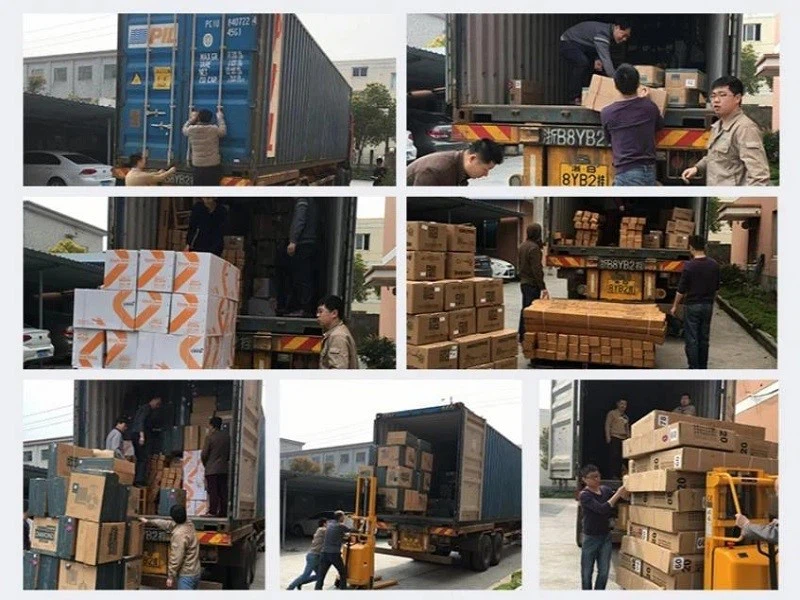
We provide LCL and FCL one-stop service. Multi shipping methods are available. DDU or DDP can be choosing according to your demand.We accept many payment methods such as L/C, D/P, T/T, Paypal, Western Union and so on.



FAQ
We're professional led flood light manufacturers in China, specialized in providing high quality custom service. If you're going to wholesale bulk high-grade led flood light, welcome to get pricelist and quotation from our factory.
led flood light, 6500k 20w led cob floodlight, 150w led floodlight