



LED Streetlight
Tongxiang Shineknot Lighting Co,.Ltd was founded in 2010. We have specialized in led lighting field for more than 14 years.
Our factory has about 50 workers and 5 engineers. We can manufacture led tube light, floodlight, high bay, emergency light and so on by 4 production line. All the products need to be inspected and tested before shipping.
-
![IP65 Outdoor Solar Garden Light]() IP65 Outdoor Solar Garden LightSolar lights are electric lamps that convert solar panels into electrical energy. During the day, even on cloudy days, this solar generator (solar panel) can collect and store solar energy. Solar...read more
IP65 Outdoor Solar Garden LightSolar lights are electric lamps that convert solar panels into electrical energy. During the day, even on cloudy days, this solar generator (solar panel) can collect and store solar energy. Solar...read more -
![Grey Die-cast Aluminum LED Solar Street Light]() Grey Die-cast Aluminum LED Solar Street LightLED solar street lights use solar radiation as their energy source. During the day, solar panels convert solar energy to charge the battery, and at night, the battery provides power to the LED...read more
Grey Die-cast Aluminum LED Solar Street LightLED solar street lights use solar radiation as their energy source. During the day, solar panels convert solar energy to charge the battery, and at night, the battery provides power to the LED...read more -
![100w IP66 Waterproof LED Streetlight]() 100w IP66 Waterproof LED Streetlight100W IP66 Waterproof LED Streetlightread more
100w IP66 Waterproof LED Streetlight100W IP66 Waterproof LED Streetlightread more
AC85-265V 50/60Hz universal Voltage
Light Efficacy up to 150lm/W -
![Aluminum Ip66 Waterproof 200w Led Streetlight]() Aluminum Ip66 Waterproof 200w Led StreetlightSMD3030 150Lm/W LED chips up to 50000 hours lifespanread more
Aluminum Ip66 Waterproof 200w Led StreetlightSMD3030 150Lm/W LED chips up to 50000 hours lifespanread more
6K High Voltage Surge test approved
Ambient operating temperature -20℃ to 40℃ -
![Remote Control Led Streetlight]() Remote Control Led StreetlightPhilips 24.7W integrated solar street lightread more
Remote Control Led StreetlightPhilips 24.7W integrated solar street lightread more
Microwave Mobile Sensor
Polycrystalline Silicon Solar Panels -
![Wide Angle LED Street Light]() Wide Angle LED Street LightHigh Brightness and long life for lighting needsread more
Wide Angle LED Street LightHigh Brightness and long life for lighting needsread more
High Transmittance PC Lampshade.Translucent,sunscreen and dustproof,anti-aging and anti-corrosion
High Hardness ABS Housing.... -
![120w Ultra Slim Streelight]() 120w Ultra Slim StreelightEnergy saving. The energy saving of LED street lights is mainly reflected in its low energy consumption, compared with traditional street lights, the energy consumption of LED street lights is...read more
120w Ultra Slim StreelightEnergy saving. The energy saving of LED street lights is mainly reflected in its low energy consumption, compared with traditional street lights, the energy consumption of LED street lights is...read more


Why Choose Us
Professional Team
Tell us what you need, and we'll analyse your market and provide a comprehensive business solution.
We will collaborate if you have a project tender, to help you win the contract.
High Quality
We will provide services from product design, production, and delivery. Your order will be guaranteed after sale.
Our Certificate
CE, Rohs.
Production Market
Our main export market: The south east Asia, middle east, south pacific and Africa.
LED Streetlight is a type of light composed of a light-emitting diode (LED). These LED-equipped lighting elements are usually installed on top of a pole to illuminate sidewalks, roadways, parking areas, and other exterior areas such as shipyards. These infrastructure construction units assist in guaranteeing safety in areas where they are installed.
LED Streetlights are also environmentally friendly. The lamps do not contain harmful chemicals such as mercury which can be harmful. LED Streetlights also provide up to 70% energy saving with no or little maintenance. LED Streetlights are, therefore, suitable for areas where replacing lamps is inconvenient, costly, or otherwise.
Benefits of LED Streetlight
Long Lifespan
LED Streetlights have a longer lifespan compared to conventional lights, often lasting tens of thousands of hours.
Longer lifespans mean less frequent replacements, reducing maintenance costs and minimizing disruptions to street lighting.
Environmentally Friendly
LED Streetlights contain no hazardous materials and are recyclable. They also emit less carbon dioxide during their lifespan.
The environmental friendliness of LEDs contributes to sustainable practices, supporting efforts to reduce the overall carbon footprint.
Improved Visibility and Safety
LED lights provide clearer and more uniform illumination, enhancing visibility on streets and sidewalks.
Improved visibility contributes to safer road conditions, reducing the risk of accidents and enhancing overall public safety.
Instant Lighting
LED for street lights reach full brightness instantly without the warm-up time required by traditional lights.
Instant lighting enhances the responsiveness of street lighting systems, providing immediate illumination when needed.
Directional Lighting
LEDs emit light in a specific direction, reducing light pollution and directing illumination where it’s needed.
Directional lighting minimizes wasted light, focusing on streets and pedestrian areas, which is beneficial for both the environment and public comfort.
Type of LED Streetlight
Cobra Head Lights
Efficient and versatile, these lights have a distinctive shape resembling a cobra’s head. They offer excellent illumination on roads and streets.
Solar LED Streetlights
Harnessing energy from the sun, these lights are eco-friendly and cost-effective. They have built-in solar panels, making them independent of the electrical grid.
Integrated LED Fixtures
Combining LED modules with the luminaire, these fixtures offer a sleek design. They are easy to install and provide uniform light distribution.
Post-Top LED Lights
Ldeal for parks and walkways, post-top lights are mounted on poles. They emit a warm, decorative glow, enhancing the aesthetics of outdoor spaces.
Architectural LED Streetlights
Designed with aesthetics in mind, these lights blend functionality with modern design elements. They often serve both practical and decorative purposes in urban landscapes.

What are the Materials of Led Street Light Poles?
Cement light pole
Cement street light poles are attached to urban power poles or erected separately. This street light pole was commonly used many years ago. The disadvantage is that it is very heavy, difficult to install, has no recycling value, and is more dangerous than other materials. It has almost been eliminated by the market now.
Iron poleIron pole
It is also called Q235 steel pole. It is made of high-quality Q235 steel, hot-dip galvanized and sprayed with plastic. It can be rust-free for 30 years and is very hard. The disadvantages are heavyweight, high transportation and installation costs, and low recycling value. Plug-in installation is not allowed. This is the most common and used street light pole in the LED street light market.
Fiberglass light pole
FRP light pole is a kind of inorganic non-metallic material with excellent performance. It has a wide variety of advantages. The advantages are good insulation, strong heat resistance, good corrosion resistance, high mechanical strength, and light weight. It can be installed in a plug-in manner. However, the disadvantages are brittleness, poor wear resistance, short lifespan, very serious damage to the rod body by ultraviolet rays, easy to be damaged by external equipment, high maintenance costs and no recycling value, and processing is very difficult and expensive. Therefore, not many LED street lights are used in the market.
Aluminum alloy light pole
At present, aluminum alloy light poles are mainly divided into two types, one is the casting aluminum method, and the other is the spinning method. Due to technological limitations, cast aluminum poles are generally less than 3 meters in height, and are usually only used as courtyard poles. Spinning light poles are high-speed spinning of 6061 or 6063 aluminum alloy pipes with equal diameters using large-scale numerical control equipment to form cones or special-shaped poles. The aluminum alloy street light pole has good anti-corrosion performance, maintenance-free, light weight, convenient transportation and installation, rich surface treatment, long service life, 100% recycling, energy saving and emission reduction; plug-in installation, strong wind resistance and small amplitude. The aluminum pole for a street light weighs 4600 N.
Stainless steel street light pole
Stainless steel poles have the best chemical and electrochemical corrosion resistance in steel, second only to titanium alloys. The method adopted in our country is to carry out hot-dip galvanizing surface treatment, and the product life of hot-dip galvanizing in line with international standards can reach 15 years. Otherwise, it is far from reach. Mostly used in courtyards, communities, parks and other places. Heat resistance, high temperature resistance, low temperature resistance and even ultra-low temperature resistance.
Application of LED Streetlight
Highways and Roadways Lighting:
Street light is illuminating these areas properly. They provide clear visibility and the proper amount of illumination for both pedestrians and drivers, which lowers the risk of accidents.
Airport Lighting:
The airports are equipped with LED street lights installed at the runways. They are safe for aircraft operations at night.
Industrial and Commercial Lighting:
Both of these areas are bigger in size, so they need a large amount of LED street lights to provide the required amount of lighting.
Parks and Playgrounds Lighting:
LED street lights are useful for both parks and playgrounds, as they help in illuminating trails, pavilions, signs, and parking lots.
Also, they can be installed anywhere in the park that needs lighting like a hospital and urban compounds.
Resort and Hotel Outdoor Lighting:
All these areas required street lighting at specific places, whether they are at roads, parks, or elsewhere.
Home, Farms, and Courtyards:
There are some locations in these areas that need proper lighting methods such as street lighting, depending on the usage.

Step 1: Prepare the Area
Clear the installation area of any obstructions and ensure a stable foundation.
Step 2: Secure the Pole
Install the light pole securely into the ground, ensuring it is straight and level.
Step 3: Connect Electrical Wiring
Follow the manufacturer’s instructions to connect the electrical wiring from the light fixture to the power source.
Step 4: Mount the LED Fixture
Attach the LED street light fixture to the top of the pole, securing it with provided screws or bolts.
Step 5: Adjust and Test
Adjust the light direction if needed. Turn on the light to ensure it functions correctly.
Step 6: Secure All Connections
Double-check and secure all electrical connections. Use waterproof seals to protect against weather.
Step 7: Complete Installation
Once satisfied with the setup, the installation is complete, providing efficient and reliable outdoor lighting.
LED Streetlight help keep streets safe and prevent accidents for drivers and pedestrians by marking the public roads and sidewalks of many communities. Older LED Streetlight use conventional light bulbs while more modern lights use energy-saving Light Emitting Diode (LED) technology.
Post
One component common to all types of LED Streetlight is the post, which rises from a base at the ground and supports the lighting element above. Street light posts contain the electrical wiring that connects the lights directly to the electric grid. Some posts also include a service door for gaining access to a street light's control unit and making repairs or adjustments from ground level.
LED Streetlight posts need to be able to withstand ice, wind and rain. Rust-resistant metals or a protective coat of paint can help preserve the post against the elements, and metal is by far the most common material for its strength and rigidity.
Bulb
Street light bulbs come in a wide range of styles and sizes. Most conventional LED Streetlight use halogen bulbs, which are similar in function and appearance to household incandescent bulbs. These bulbs consist of a vacuum tube with a filament inside and an inert gas (such as halogen) that causes the burned portion of the filament to recollect on the filament wire, extending the life of the bulb. Metal halide bulbs employ similar technology but use even less energy and produce more light.
Heat Exchangers
LED LED Streetlight include heat exchangers to regulate temperature. These devices moderate the heat that an electrical current produces as it powers the LED. Heat exchangers use the passage of air over a series of fins to keep the lighting element cool and to make sure that the LED is able to produce even light without darker areas or "hot spots" that might otherwise occur.
Lens
LED and conventional LED Streetlight feature a curved lens that is usually made of heavy-duty glass or, more commonly, plastic. Street light lenses function to magnify the effect of the light inside. They also direct the light downward toward the street for maximum efficiency. Finally, street light lenses protect the delicate lighting elements inside. Fogged, scratched or broken lenses are much easier and cost-effective to replace than entire lighting elements.
How to Regularly Maintain LED Street Lights?
LED street lights have become a popular choice for municipalities and businesses looking to save energy and maintenance costs. LED technology is not only more energy efficient than traditional street lights, but also requires less maintenance. However, to ensure that LED street lights continue to operate at their best, regular maintenance is essential.
Clean fixtures
One of the most important aspects of LED street light maintenance is keeping the fixtures clean. Dust, dirt, and other debris can accumulate on the fixture and reduce the light output of the LED. Cleaning your fixtures regularly with a soft, dry cloth or mild cleaning solution will help maintain light output and extend the life of your LEDs.
Check the wiring
LED street lights are powered by wiring that connects them to a power source. Over time, wiring can become damaged or degraded, leading to potential electrical problems. Regularly checking your wiring for signs of wear, such as frayed or exposed wires, can help prevent electrical problems and ensure your lights continue to operate safely.
Check whether water has entered
Water intrusion is a common problem with outdoor lighting fixtures, and LED street lights are no exception. Moisture can cause corrosion and electrical faults, so it’s important to check regularly for signs of water intrusion, such as condensation inside fixtures or water damage outside. If water is found, it should be inspected and repaired promptly to prevent further damage.
Replace damaged or burned out LEDs
While LED street lights are known for their long lifespan, LEDs can still become damaged or burn out over time. Regularly inspecting light fixtures for signs of damage or burned-out LEDs and replacing them as needed will help maintain light output and ensure street lights continue to provide adequate illumination.
Test the controller and sensors
Many LED street lights are equipped with controllers and sensors that enable dimming and automatic on/off functions. Regularly testing these controllers and sensors to ensure they are functioning properly can help optimize energy use and ensure street lights are operating as expected.
Regular maintenance inspections
In addition to the specific maintenance work mentioned above, it is also important to conduct comprehensive inspections of LED street lights on a regular basis. This may include checking for loose or damaged parts, making sure fixtures are securely installed, and checking for any other signs of wear. By maintaining a regular maintenance schedule and thoroughly inspecting your street lights, potential issues can be identified and resolved before they become major problems.
Our Factory
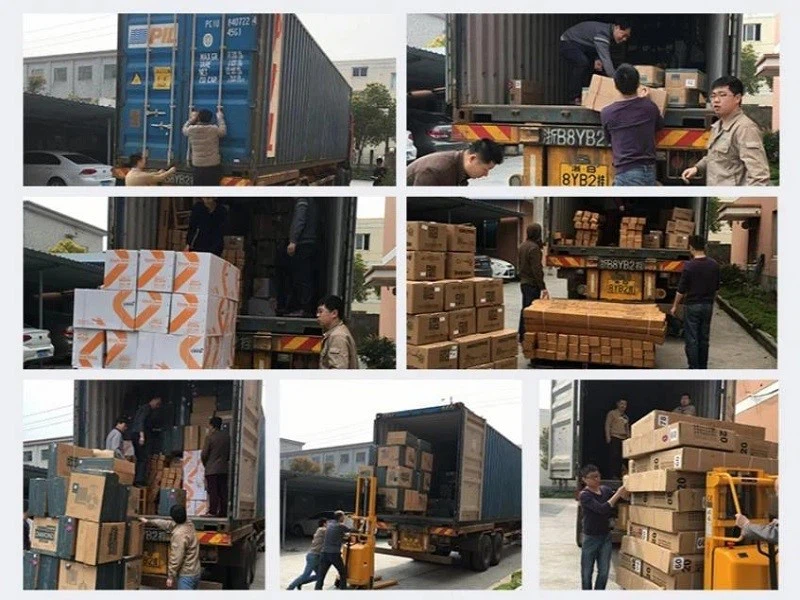
We provide LCL and FCL one-stop service. Multi shipping methods are available. DDU or DDP can be choosing according to your demand.We accept many payment methods such as L/C, D/P, T/T, Paypal, Western Union and so on.



FAQ
We're professional led streetlight manufacturers in China, specialized in providing high quality custom service. If you're going to wholesale bulk high-grade led streetlight, welcome to get pricelist and quotation from our factory.
120w ultra slim streelight, remote control led streetlight, aluminum ip66 waterproof 200w led streetlight